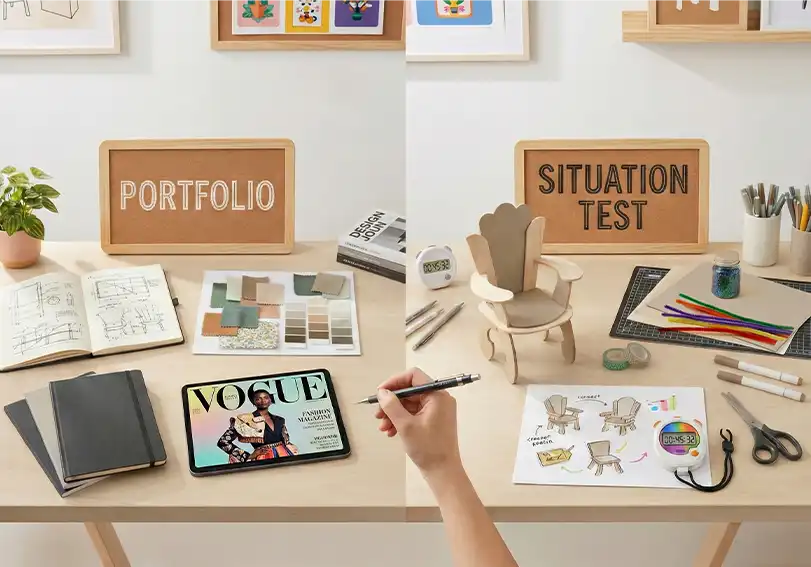
If you’re preparing for NIFT or applying to other top design schools like NID or private institutions, you’ve likely heard of both Portfolio Reviews and the NIFT Situation Test. But how do they differ — and how should you prepare?
🧩 Situation Test (NIFT-specific)
Objective: Evaluate your ability to think, build, and communicate design ideas using limited materials.
🔹 What to Expect:
On-the-spot model making
Provided materials like paper, wire, clay, fabric
A 3D model with a short written explanation
🎯 Preparation Tips:
Practice with basic materials at home (don’t rely on fancy craft supplies)
Focus on concept + construction + finishing
Build time efficiency — complete models within 2 hours
Document each model you make for feedback
Think of it like a “design hackathon” — you need to show creativity, speed, and clarity.
🖼️ Portfolio (for private design colleges or interviews)
Objective: Showcase your artistic personality, technical skills, and creative journey over time.
📁 What to Include:
Sketches (observation + imagination)
Design process work
Photography, digital art, collages, fashion illustrations, or product ideas
A personal project or storytelling piece
Captions explaining your intent or concept
🎨 Tips to Build a Great Portfolio:
Show variety (mediums, themes, ideas)
Show growth (early vs. recent work)
Personalize it — include projects you’re proud of, even outside design
Use an A3-sized binder, and keep it clean and organized
🚀 Summary Table:
| Criteria | Situation Test | Portfolio |
|---|---|---|
| Purpose | Hands-on execution | Showcase of past work |
| Format | Model-making + explanation | Collection of curated works |
| Assessed on | Concept, materials, craft, clarity | Creativity, thought process, range |
| Evaluation Style | In-person, on-the-spot | Often shared during interviews |
“Situation Test is about presence of mind. Portfolio is about depth of mind.”