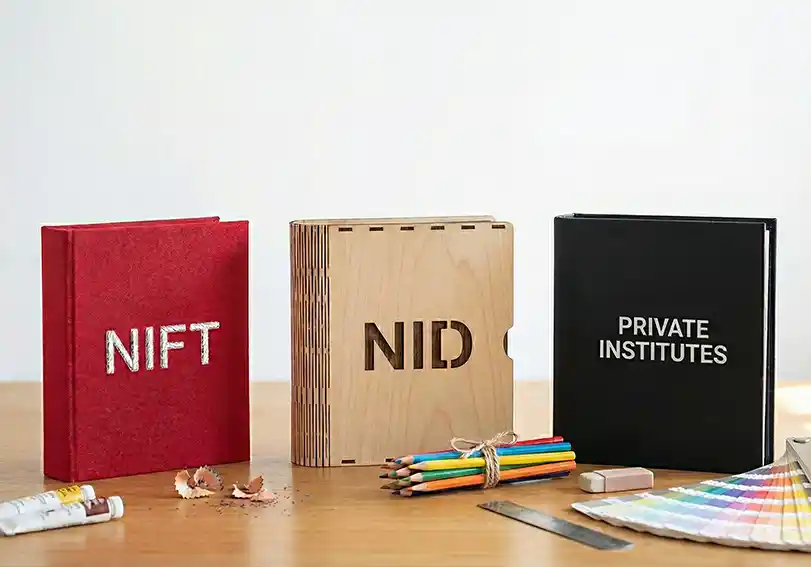
India’s design education landscape has evolved dramatically, with multiple prestigious institutes offering world-class programs. But when it comes to choosing the right one, aspirants often ask:
“Should I aim for NIFT, NID, or a top private design college?”
Let’s decode this decision with a practical comparison based on key factors like curriculum, reputation, specialization, and career opportunities.
🏛️ 1. NID – National Institute of Design
Campuses: Ahmedabad (Main), Gandhinagar, Bengaluru, and others
Known For:
Product design, Industrial design, Animation, Graphic, Exhibition design
Strong emphasis on concept development and research
Entrance: DAT Prelims + DAT Mains (Studio Test + Interview)
Pros:
✅ Oldest and most reputed design college in India
✅ Excellent faculty and government-backed infrastructure
✅ International recognition and top-notch placements
Cons:
❌ Limited number of seats (Highly competitive)
❌ Fewer fashion-related specializations compared to NIFT
Ideal For: Students inclined toward product, visual communication, animation, or UX/UI design
🧵 2. NIFT – National Institute of Fashion Technology
Campuses: 18 across India (Top ones: Delhi, Mumbai, Bengaluru, Hyderabad)
Known For:
Fashion design, Textile, Accessory, Fashion Communication, Knitwear, Fashion Technology
Industry-aligned curriculum with strong fashion-industry tie-ups
Entrance: GAT + CAT + Situation Test / GD-PI (for PG)
Pros:
✅ Specializes in fashion and lifestyle design
✅ Wide network and internships with top fashion houses
✅ Regular industry exposure, fashion shows, and collaborations
Cons:
❌ Less focus on product or industrial design
❌ Varying faculty and infrastructure quality across campuses
Ideal For: Students passionate about fashion, styling, textiles, communication, or retail management
🏫 3. Top Private Design Colleges in India
Some leading names:
Srishti Institute (Bangalore)
UID – Unitedworld Institute of Design (Ahmedabad)
ISDI (Mumbai)
Pearl Academy (Delhi, Mumbai, Jaipur)
MIT Institute of Design (Pune)
Known For:
Diverse specializations, often blending business + design + technology
Modern infrastructure, international collaborations, real-world projects
Pros:
✅ Liberal curriculum and modern pedagogy
✅ Access to exchange programs and visiting faculty from global schools
✅ Easier entry compared to NIFT/NID
Cons:
❌ High tuition fees
❌ Brand value not as strong as NID/NIFT in some cases
Ideal For: Students seeking flexibility, new-age design careers, or missed NID/NIFT
📊 Quick Comparison Chart
| Criteria | NID | NIFT | Private Colleges |
|---|---|---|---|
| Focus Area | Product & Communication | Fashion & Lifestyle | Varies: UX, Interior, Animation, Branding |
| Degree Type | B.Des / M.Des | B.Des / MFM / B.FTech | B.Des / Diplomas / Certifications |
| Fees (approx.) | ₹3–4 Lakhs per year | ₹2.5–3.5 Lakhs per year | ₹4–6 Lakhs per year (higher in metros) |
| Entrance Difficulty | Very High | High | Moderate |
| Industry Recognition | Excellent | Excellent | Good to Very Good (depends on college) |
| Campus Placements | Top-tier brands | Fashion powerhouses | Startup & corporate tie-ups |
🧭 Final Thoughts: Which One’s Right for You?
Choose NID if you love problem-solving, storytelling, and building experiences or products.
Choose NIFT if you’re passionate about fashion, styling, textiles, or the luxury lifestyle space.
Choose a Private Institute if you value experimental learning, interdisciplinary design, or global exposure.
🎓 “The right college doesn’t just give you a degree — it shapes your creative mindset.”